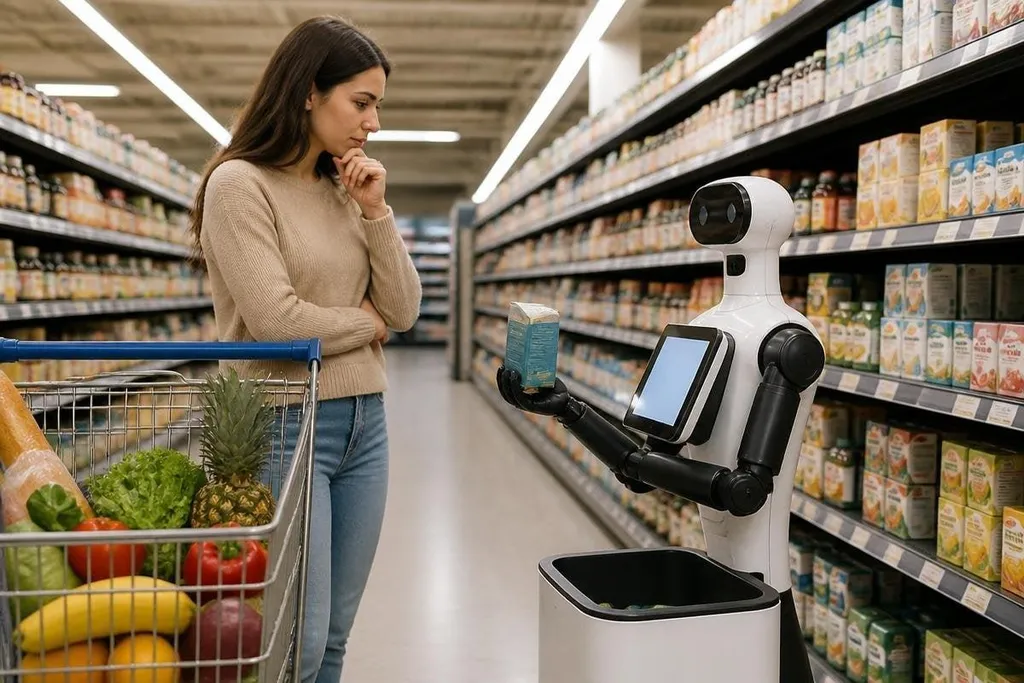
A shopping robot compares prices, reads product details, and sorts options by the rules you give it. It can't know if a chair feels comfortable, a jacket fits well, or a phone will still suit you after six months.
That makes robot shopping advice useful for narrowing a list, but risky as a final decision.
- Good use: compare clear facts such as price, size, battery capacity, and return terms.
- Weak use: judge comfort, build quality, long-term reliability, or personal taste.
- Safe habit: ask for sources, then check the seller's page before paying.
What the robot can compare
A robot works best with details that can be written down and checked. Give it a budget, a size limit, a required feature, and a short list of products. Those details let it arrange the options around your stated needs.
That may save time when the products have similar names or long specification sheets. It may also point out a missing detail, such as a charger that isn't included or a return period that differs between sellers.
The quality of the answer depends on the information it receives. If the price is old, the product page is incomplete, or the robot has no source for a claim, the neat comparison can still be wrong.
Ask it to show the source for each fact. A product link from the seller is useful for price, stock, dimensions, and warranty terms. A customer comment may describe a problem, but one comment can't prove that every buyer will face it.
Where the advice gets weak
Shopping involves facts and judgement. Robots handle the first part better than the second because personal fit is hard to reduce to a list of features.
A robot may rank two laptops by memory, storage, and price. It can't know how much keyboard feel matters to you unless you explain it, and even then it is working from your description rather than direct use.
The same limit applies to clothes, furniture, tools, and food. Measurements let a robot compare size or ingredients. It can't feel fabric, sit in the chair, hold the tool, or taste the meal.
Reviews bring another problem. A robot may summarize many comments, but a summary can hide the reason behind a complaint. A noisy fan may matter to someone working in a bedroom and mean little to someone using the same product in a workshop.
I'd use a robot to cut a long list to two or three products, then make the final choice from source pages, return rules, and your own priorities.
Product rankings can look personal even when an assistant relies on fixed rules and a limited set of product pages. Robot24.com's consumer robotics reports can help you compare those inputs with the system's stated task before you hand over more shopping data.
The data you give away
A shopping question can reveal more than a product preference. It may include your budget, location, health needs, home layout, family details, or work habits.
Before using a robot for a purchase, check what information the service stores and how it handles chat records. Avoid entering details that the recommendation does not need. A robot doesn't need your full address to compare two vacuum cleaners.
Treat product suggestions as working notes, not proof. Ask the robot to separate confirmed facts from guesses and to list the details it could not verify. That makes gaps visible before they affect your choice.
A safer way to ask
A precise request gives the robot less room to fill gaps with assumptions. Include the task, the limits, and the evidence you want back.
Use this checklist before accepting a recommendation:
- Set the job: describe what you need the product to do each week.
- Set hard limits: give your budget, size, power, compatibility, or delivery date.
- Request sources: ask for a link beside each price, specification, or policy.
- Check the seller: confirm stock, warranty, returns, and the exact model number.
- Test the trade-off: ask what you give up by choosing the cheaper option.
- Pause on personal fit: decide comfort, taste, noise, and handling for yourself.
A useful follow-up question is, “Which part of this answer is least certain?” The reply may expose an old price, a missing review, or a feature shared by several models.
Used well, a robot reduces the work of comparing products, but it cannot take responsibility for the purchase. Use it to make the shortlist clearer, then let verified details and your own use decide what reaches the checkout.